
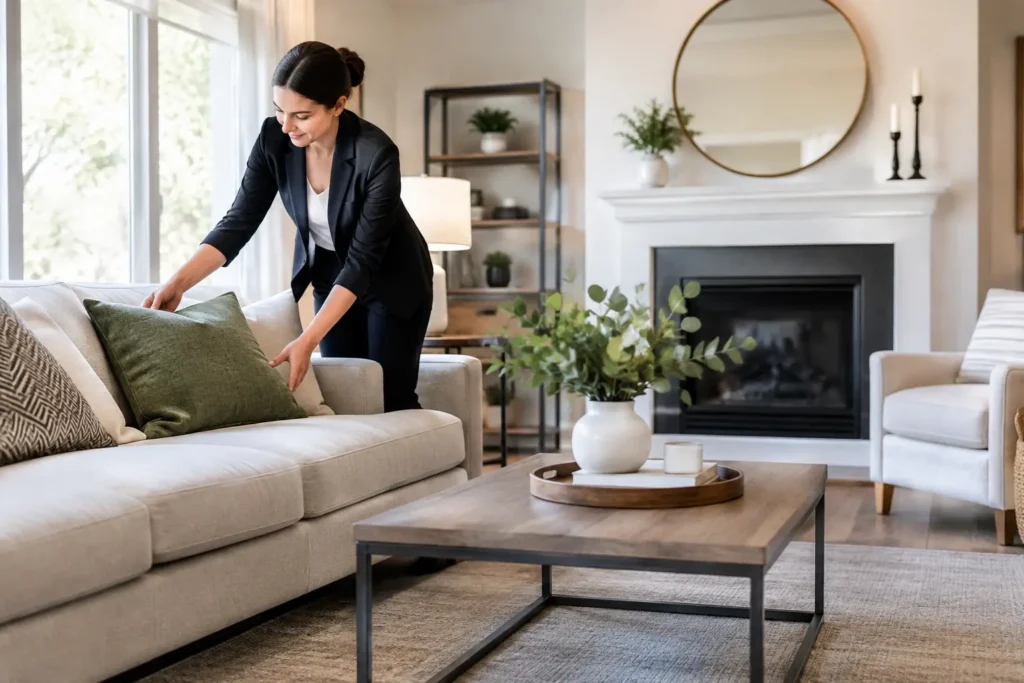
A buyer may spend only a few seconds deciding whether a listing deserves a showing. That is why the best home staging tips are not about making a property look expensive or impersonal. They are about helping buyers immediately understand the space, imagine their routines there, and feel confident that the home has been well cared for.
For sellers across Toronto, the GTA, and surrounding communities, effective staging can strengthen listing photos, increase showing interest, and reduce the distractions that cause buyers to hesitate. The goal is simple: present a clean, bright, functional home that allows its strongest features to do the work.
Start With the Buyer’s First Impression
Begin at the front door, because buyers form an opinion before they step inside. Clear leaves, snow, or clutter from the walkway, clean the door and hardware, and make sure exterior lights work. A worn welcome mat, overflowing recycling bins, or an untended entry can create doubt before the showing begins.
Inside, focus on the first sightline. When the front door opens, buyers should see a tidy, well-lit area rather than shoes, coats, pet supplies, or a crowded console table. Even a compact condo entry can feel more inviting when it has room to breathe.
Declutter Without Erasing the Home
Decluttering is one of the highest-return staging decisions a seller can make. It makes rooms appear larger, reveals storage capacity, and keeps buyers focused on the property instead of the current owner’s belongings.
This does not mean every surface must be empty. A few intentional pieces, such as a small plant, a tray, or a neatly arranged book, can make a room feel lived in. The difference is visual noise. Remove excess furniture, stacks of paper, countertop appliances, personal collections, and anything that makes a room feel hard to maintain.
Closets, cabinets, and pantries deserve the same attention. Buyers will open them. A closet packed tightly with clothing suggests insufficient storage, even when the closet itself is a good size. Pack away off-season items and leave enough open space to demonstrate capacity.
Clean for the Details Buyers Notice
A clean home is not merely a presentation standard. It signals care, which can influence how buyers view the property’s maintenance history. Deep-clean kitchens and bathrooms first, then address high-touch areas such as light switches, door handles, baseboards, vents, and window ledges.
Pay special attention to odors. Cooking smells, smoke, pet odors, and heavily scented products can affect a showing quickly. Open windows briefly when weather permits, empty garbage before every appointment, and use neutral cleaning products rather than trying to cover odors with strong fragrance.
If there are visible maintenance issues, handle them before photography whenever possible. A dripping faucet, loose cabinet handle, burned-out bulb, or damaged caulking line may be minor, but buyers often see small unfinished items as signs of larger problems.
Use Light to Make Rooms Feel Larger
Light changes how buyers experience a room. Open blinds and curtains for daytime photography and showings, clean the windows, and make sure every fixture has working bulbs. Consistent warm-white bulbs usually create a more comfortable result than mixing cool, warm, and yellow tones throughout the home.
Do not rely only on ceiling fixtures. Table lamps and floor lamps can soften dark corners and give living rooms, bedrooms, and lower-level spaces more depth. In a condo with limited natural light, this can make a substantial difference.
There is a trade-off, however. Bright does not mean overexposed. Avoid placing lamps where they create glare in mirrors or television screens, and do not block attractive window views with oversized furniture. Natural light and a clear view are selling features, especially in dense urban neighborhoods.
Give Every Room a Clear Purpose
Buyers should not have to guess how to use a space. A spare room filled with boxes can look like a storage problem. A spare room staged as a simple office, guest room, or nursery helps buyers see its potential.
This is especially useful for condos and smaller homes, where flexibility matters. A compact dining area can be shown as a place for meals and work, but it should not look like a permanent office supply station. A small desk, one chair, and restrained accessories make the function clear without making the room feel crowded.
If your basement is unfinished or used primarily for storage, be honest about its condition while showing its usable footprint. Clear pathways, improve lighting, and organize stored items. Staging should clarify value, not make promises the property cannot support.
Make the Kitchen and Bathrooms Feel Move-In Ready
Kitchens and bathrooms often carry more weight than decorative living spaces. Buyers expect them to be clean, functional, and easy to picture using from day one.
In the kitchen, clear counters except for one or two purposeful items. Fresh towels, a bowl of fruit, or a simple plant can add warmth, but a crowded counter makes even a large kitchen feel short on workspace. Clean appliance fronts, polish the sink and faucet, and remove magnets, papers, and personal notes from the refrigerator.
Bathrooms benefit from the same approach. Put away toiletries, replace worn shower curtains or bath mats, and use fresh, neutral towels. Repair visible grout and caulking issues where needed. A dated bathroom may not require a full renovation before listing, but it must look clean, cared for, and functional.
Choose Neutral Updates With a Clear Return
Not every home needs major renovations before sale. In many cases, a fresh coat of neutral paint, updated light fixtures, or new cabinet hardware will improve presentation without creating a costly project. The best choice depends on the home’s condition, likely buyer, price range, and the competing inventory nearby.
Be cautious about highly personal design decisions. A dramatic accent wall or fashionable fixture may appeal to some buyers but narrow the audience for others. Neutral does not have to mean bland. Soft contrast, natural textures, and a small amount of color through pillows, art, or greenery can feel current without becoming distracting.
Before spending heavily, consider the expected return. Replacing a visibly worn floor may be worthwhile. Installing a premium kitchen solely for resale may not be, particularly if comparable homes do not support the higher price. A local real estate professional can help prioritize work that protects your asset and supports your listing strategy.
Stage for Photography, Then for Real Showings
Listing photos are often the buyer’s first tour, so staging should be complete before the photographer arrives. Photograph-ready rooms need clean surfaces, balanced lighting, aligned furniture, and no visible cords, pet items, or personal hygiene products.
Then prepare for the practical demands of showings. Keep a small basket or bin available for quick cleanup before appointments. It can hold mail, chargers, children’s items, and other daily essentials that tend to collect on counters. Have a plan for pets, and leave the home whenever possible so buyers can speak freely and take their time.
If the home is occupied, perfect staging every day may not be realistic. Aim for a repeatable routine rather than an impossible standard. Beds made, dishes put away, counters cleared, lights on, and a quick sweep through the main rooms will cover the details buyers notice most.
Do Not Forget Outdoor Living Space
Balconies, patios, yards, and front porches can add meaningful perceived value, particularly when buyers want more room to relax or entertain. Clean the area, remove broken or unused furniture, and show its intended use with a modest seating arrangement if space allows.
For a small balcony, two chairs and a compact table are often enough. For a larger yard, define the best feature, whether that is a seating area, garden, pool, or play space. Keep seasonal realities in mind. A winter listing can still show a cared-for exterior with clear access, outdoor lighting, and tidy storage.
Know When Professional Help Makes Sense
Some properties need only thoughtful preparation. Others benefit from a professional stager, especially vacant homes, luxury listings, unusual floor plans, or properties competing in a busy market. Vacant rooms can photograph smaller than they are, and buyers may struggle to judge scale without furniture.
A staging consultation can also be useful before deciding whether to renovate. An experienced advisor can distinguish between changes that improve marketability and changes that consume time and budget without changing buyer perception. The right approach is not always the most elaborate one.
Sunview Real Estate helps sellers make practical, market-aware decisions about preparing a home, positioning it for buyers, and managing the details that support a confident sale. Before your listing goes live, walk through the property as if you were seeing it for the first time. The small adjustments you notice at that moment are often the ones that help a buyer feel at home.